Field of Technological Industries

img
Field:

Technological Industries

Our Vision

The Faculty of Technological Industries at King Salman International University seeks excellence and leadership in the field of technological industries locally, regionally and internationally.

Our Mission

The Faculty of Technological Industries at King Salman University aims to graduate technologists capable of understanding and assimilating modern technology and technically qualified in academic programs for public works, refrigeration and air conditioning, production lines and precision equipment technologies. This will continuously upgrade the level of graduates to solve technological problems in the workplace and production sites.

Our Core Values

Excellence

Encouraging and promoting excellence through innovation and creativity.

Quality

Provide high-quality programs following international standards for education and academic research.

Integrity

Being honest and ethical in all interactions, maintaining the highest ethical standards in teaching, research, public engagement and service.

Innovation

Develop the spirit of innovation and excellence, and the application of the best global practices in all of the university activities.

Self-development

Providing students with an opportunity to engage in a lifestyle that contributes to their personal development.

Transparency

A clear strategic plan with practical dimensions that will raise the level of education and learning and produce prestigious research.

Our Strategic Objectives

  • To prepare specials in technology with integrated theoretical and practical knowledge in the Faculty specializations.
  • To prepare specialists and leaders in the technology sector.
  • To conduct research and studies in the specialization fields of the Faculty.
  • To exchange experiences and information with institutions concerned with Egyptian, Arab and international technology and help in addressing common issues
  • To provide expertise and advice in the specialization fields of the Faculty.
  • Solving and developing technology problems.
  • To contribute to the service and development of the surrounding environment.
  • To instil comprehensive knowledge of different aspects of specialization to allow for keeping up with technological developments.
  • To entrench logical thinking; take stances and come up with different alternatives; act decisively and confidently, and acquire the ability to innovate and work in a team.
  • To have high verbal and written communication skills, besides excellent skills to acquire, organize and display information, especially using information technology.
  • To always search for the best solutions, take initiative, and participate in social and cultural change.
  • Motivative for lifelong learning and continuous cultural development.

Major programs

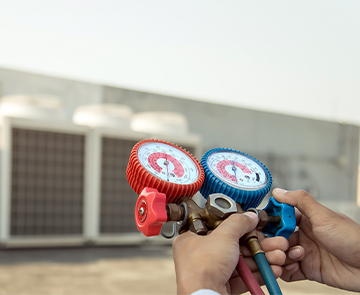
Students learn recognition of the profession of maintenance of cooling and air conditioning and its fields.

Identification of the profession of manufacturing and maintenance of production lines and fields.

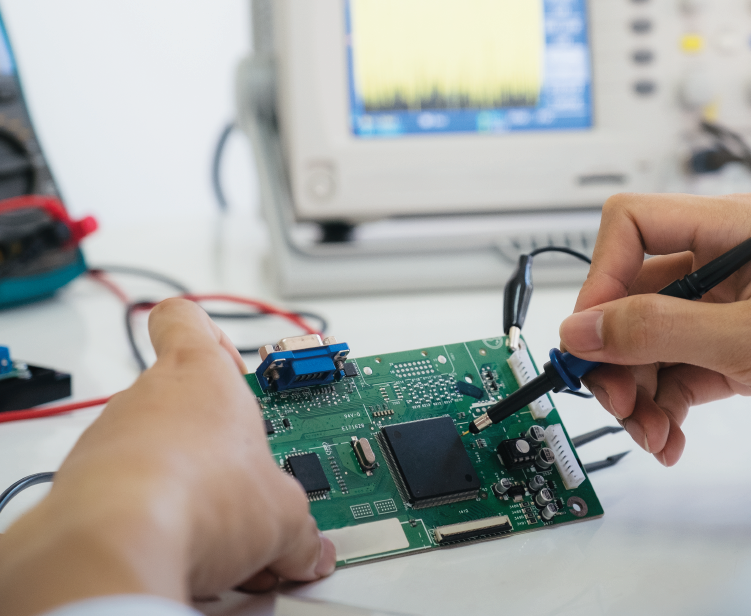
Recognition of the maintenance of the precision devices industry and its fields.

Subscribe Newsletter

To get more updates subscribe our newsletter

Centre Services

Through one-on-one guidance, practical simulations, and constructive feedback, students are equipped with the tools and strategies needed to navigate the job market successfully and make informed career decisions.

  1. Résumé Critique
    • Learn how to design and format a professional résumé that reflects key achievements and skills.
    • Understand how to tailor résumés for specific job roles and industries.
    • Apply techniques to ensure compatibility with Applicant Tracking Systems (ATS).
    • Receive individualized feedback to enhance clarity, accuracy, and impact.
  2. Mock Interview
    • Develop confidence and fluency in responding to common and behavioural interview questions.
    • Practice interview techniques using structured frameworks such as STAR.
    • Improve non-verbal communication, body language, and self-presentation skills.
    • Receive targeted feedback to strengthen performance in future interviews.
  3. Career Services
    • Explore suitable career paths based on personal interests, skills, and academic background.
    • Learn effective networking and job search strategies.
    • Gain insights into market trends and employer expectations.
    • Build a personalized career development plan to support long-term professional growth.

Specialized Courses

Through practical knowledge, hands-on projects, and sector-specific insights, the Specialized Courses ensure participants gain industry-relevant skills and the confidence needed to excel in their chosen fields and stand out in an increasingly competitive job market.

Soft Skills

  1. Presentation Skills
    Learn how to plan, structure, and deliver effective presentations.
    • Develop confidence in public speaking and audience engagement.
    • Use visual aids and storytelling techniques to enhance message clarity and impact.
    • Improve body language, tone, and overall presentation delivery.
  2. Teamwork Skills
    • Understand the principles of effective team dynamics and collaboration.
    • Learn how to contribute productively within diverse teams.
    • Develop conflict resolution, active listening, and problem-solving skills.
    • Foster leadership and accountability within group settings.
  3. Communication Skills
    • Strengthen verbal and written communication in professional contexts.
    • Learn to adapt communication style to different audiences and situations.
    • Practice active listening and constructive feedback.
    • Enhance interpersonal skills for effective networking and teamwork.
  4. Leadership 

1. Resume Writing & Critique

  • Learn how to create a professional resume tailored to job opportunities.
  • Understand the difference between CV and Resume.
  • Apply effective writing techniques to highlight skills and achievements.
  • Participate in a resume critique workshop to ensure your resume is ATS-friendly and market-ready.

2. Interview Techniques & Mock Interviews

  • Develop strong interviewing skills through practical training.
  • Learn how to answer behavioral and technical questions using frameworks like STAR.
  • Gain confidence through mock interviews with feedback from career advisors.
  • Improve communication, body language, and personal branding.

3. Job Search Techniques & LinkedIn Profile Building

  • Explore effective job search strategies and online platforms.
  • Learn how to analyze job descriptions and tailor applications accordingly.
  • Create and optimize a professional LinkedIn profile.
  • Build a strong online presence and network with potential employers.

Learning Outcomes

By completing the Career Bundle, students will be able to:

  • Develop a market-oriented resume and professional online profile.
  • Demonstrate strong interview and communication skills.
  • Apply effective job search strategies to secure internships and full-time roles.

Various workshops were delivered by graduates who hold accredited certificates in their fields, in cooperation with student and scientific societies at the university.

 This approach aims to build graduates’ confidence and strengthen their instructional and presentation skills under the supervision of UCCD professional trainers to ensure quality delivery. Examples include student groups such as KMSA, KART, and SSC.

A seminar on innovation and Artificial Intelligence (AI) was organized for students at the Ras Sedr branch. Offering special programs to promote innovation and entrepreneurship. Organizing seminars on establishing small businesses and freelance work. 

Creating an enabling environment for innovators through initiatives such as 'Be Ready' and 'One Million Qualified Innovators.'

The center actively engaged with companies and organized a Career Fair.

 Organizing employment fairs and professional networking events to connect students and graduates with employers. 

Providing internship and employment opportunities in both the public and private sectors. Training industrial students under the European Union grant.

Conducting ABOUT 80 sessions for all final-year students.

 Providing one-on-one counseling sessions to help students explore their career interests and set their goals. Assisting students with writing and reviewing their CVs properly.

A total of 110 workshops were conducted for all final-year students during the 2024/2025 academic year, with a total of 2,355 trainees (Excel sheet attached). 

Delivering high-quality training programs to develop personal and professional skills. Organizing workshops and lectures (e.g., CV writing, job interviews, marketing, and entrepreneurship).

Technical Support and Accreditation Readiness Committee carries out the following activities:


  1. Providing technical support to the Quality Assurance Units in the faculties for managing quality systems and monitoring the implementation of related procedures.
  2. Offering technical support to the university’s faculties to obtain local and international accreditation.
  3. Designing and developing monitoring and evaluation templates to ensure the quality of various activities within the university.
  4. Preparing and implementing field visit plans or periodic meetings with the Quality Assurance Units in the faculties—either in person or remotely.
  5. Preparing an annual report on the committee’s activities and submitting it to the Director of the Center.

Strategic Plan Implementation Monitoring Committee undertakes the following activities:


  1. Regularly reviewing the university’s vision and mission in light of new developments, and supervising their periodic update with the participation of all relevant stakeholders.
  2. Developing the university’s environmental analysis methodology and setting implementation plans that ensure the participation of all parties, in coordination with the Center’s administration.
  3. Supervising the preparation of environmental analysis tools, ensuring their appropriateness for the targeted groups of each tool.
  4. Proposing updates or modifications to the university’s strategic plan and ensuring it is communicated to all concerned parties through various channels.
  5. Following up on the implementation of the university’s strategic plan activities.
  6. Providing technical support to faculties in preparing and following up the implementation of their strategic plans in alignment with the university’s overall strategy.
  7. Organizing training sessions in the field of strategic planning for faculty members and teaching assistants, delivered by the National Authority for Quality Assurance and Accreditation, in coordination with the Center’s Training Unit.
  8. Preparing an annual report on the committee’s activities and submitting it to the Director of the Center.

Training and Human Resources Development Committee undertakes the following activities:


  1. Preparing the Center’s annual training plan to meet the needs of the Center’s internal committees as well as the faculties and administrative departments of the university regarding educational quality. This is based on training needs assessment results, followed by the design of appropriate training programs.
  2. Implementing training courses designed by the Center and issuing certificates upon completion.
  3. Coordinating the organization of training programs offered by the National Authority for Quality Assurance and Accreditation of Education (NAQAAE) or other relevant entities.
  4. Measuring the impact of training, evaluating its outcomes and effectiveness, and preparing the required reports.
  5. Providing awareness and technical support in the field of training to the Center’s internal committees and to the training committees of the Quality Assurance Units in the faculties.
  6. Establishing a comprehensive database that includes all training programs conducted by or under the supervision of the Center, including the number and names of participants, as well as follow-up and evaluation reports for each course.
  7. Preparing an annual report on the committee’s activities and submitting it to the Director of the Center.

Measurement and Assessment Committee carries out the following activities:


  1. Promoting a culture of measurement and assessment and raising awareness of the importance of developing assessment processes as a cornerstone of improving the university’s educational system.
  2. Providing technical support to faculties in reviewing assessment methods, tools, and examination results.
  3. Issuing guidelines and regulations for developing assessment and examination systems in accordance with the approved National Academic Reference Standards (NARS), and disseminating them among the faculties’ measurement and assessment committees.
  4. Training faculty and teaching assistants in measurement and assessment techniques in collaboration with the Training Committee.
  5. Following up on the preparation and updating of question banks for academic courses in alignment with learning outcomes and program academic standards.
  6. Monitoring satisfaction indicators among students and faculty regarding assessment systems, student evaluation, and examinations within faculties.
  7. Reviewing and preparing annual examination evaluation reports, developing executive plans for corrective actions to address weaknesses, and enhancing strengths.
  8. Encouraging faculties—especially those with large student numbers—to apply electronic assessment systems, including e-examinations, e-marking, and exam results analysis.
  9. Providing technical support to faculties’ measurement and assessment committees in conducting statistical analysis of automated grading results.

Surveys, Publication, and Sustainability Committee performs the following activities:


  1. Designing surveys to collect feedback from all relevant stakeholders, including:
    • Internal stakeholders (faculty members, teaching assistants, students, and administrative staff) regarding the performance and activities of the university/faculty.
    • External stakeholders, such as employers and community beneficiaries, regarding the quality and competence of graduates.
    • Field training providers, to evaluate and improve students’ skills through continuous feedback.
  2. Collecting, analyzing, and summarizing survey results from the various faculties, and proposing corrective actions in coordination with the concerned faculties.
  3. Conducting satisfaction surveys for participants in training programs organized by the Quality Assurance and Accreditation Center, analyzing data, and preparing statistical reports to be presented and discussed at the University Council.