
Refrigeration and Air Conditioning program
Program Details
| Courses: 54 Courses | Duration: 8 Semesters or 4 Semesters | Language: English |
| Seats: 100 Seats (47 Rsvd) | Credit Hours: 116 Cr. Hrs. or 59 Cr. Hrs | Department: Technological Industries |
Program Description
- Recognition of the profession of maintenance of cooling and air conditioning and its fields.
- Distinguishing between measurement devices and switching between them.
- Identification of pressure and heat measuring devices in cooling and air conditioning in addition to ways for identifying faults and solutions. Besides developing practical and theoretical skills.
- Recognition of the composition of the cooling and air-conditioning equipment and the methods of installation, manufacturing and occupational safety.
- Identification of engineering drawings for the distribution of cooling and air-conditioning equipment, components and engineering maintenance and planning procedures.
Job opportunities
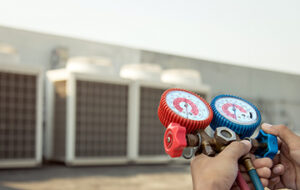
Installation, maintenance and operation of all projects of cooling systems and the preservation of products as well as air conditioning and the
increase in the demand for them due to global warming and the high temperature of the earth.
Getting started
-
Semester 1
Code Course Name LCT LAB TUT OTH CNTCT CH SWL ECTS MAT111 Mathematics I 3 1 0 0 4 3 150 6 MTP192 Safety & Security Management of Industrial Plants 2 0 1 1 4 2 120 4 PHY111 Physics I 2 2 0 0 4 3 150 6 MTP191 Technical Drawing 2 0 1 3 6 3 180 6 UC1 University Requirement (1) 2 0 0 0 2 2 90 0 UE1 Elective University Requirement (1) 2 0 0 0 2 2 90 4 -
Semester 2
Code Course Name LCT LAB TUT OTH CNTCT CH SWL ECTS CHE141 Physical Chemistry 2 2 0 0 4 3 150 6 MTP111 Material Science 2 2 1 0 5 3 165 6 MTP112 Strength of Materials 2 2 1 0 5 3 165 6 MAT112 Mathematics II 2 2 0 0 4 3 150 6 UC2 University Requirement (2) 2 0 0 0 2 2 90 4 -
Semester 3
Code Course Name LCT LAB TUT OTH CNTCT CH SWL ECTS MTP221 Thermodynamics 2 0 3 0 5 3 165 6 MTP222 Technical Drawing by PC 2 0 3 0 5 3 165 6 MTP291 Organization, Administration & Management Responsibility 2 0 1 1 4 2 120 4 ETP211 Computer Science 2 0 0 3 5 3 165 6 UC3 University Requirement (3) 2 0 0 0 2 2 90 4 UE2 Elective University (2) 2 0 0 0 2 2 90 4 -
Semester 4
Code Course Name LCT LAB TUT OTH CNTCT CH SWL ECTS MTP224 Refrigerators 2 0 1 3 6 3 180 6 MTP225 Air Conditioners 2 0 1 3 6 3 180 6 MTP228 Internship 0 0 0 6 6 1 120 2 MTP229 Group Project Work 0 3 3 3 9 3 225 6 UC4 University Requirement (4) 2 0 0 0 2 2 90 4 UE3 Elective University (3) 2 0 0 0 2 2 90 4 -
Semester 5
Code Course Name LCT LAB TUT OTH CNTCT CH SWL ECTS MTP321 Ventilation & Duct Design 2 0 3 0 5 3 165 6 MTP322 Refrigeration Stores 2 0 3 0 5 3 165 6 MTP323 Central A/C Systems 2 0 3 0 5 3 165 6 MTP324 Maintenance of Refrigerators & Air Conditioners 2 0 1 3 6 3 180 6 UC5 University Requirement (5) 2 0 0 0 2 2 90 4 -
Semester 6
Code Course Name LCT LAB TUT OTH CNTCT CH SWL ECTS MTP325 Control Systems in Refrigeration & A/C 2 0 3 0 5 3 165 6 MTP326 Refrigeration & A/C Drawing 2 0 3 0 5 3 165 6 MTP327 Air Handling Units 2 0 1 3 6 3 180 6 MTP328 Hazards & Implementations of Safe Working Practices 2 0 1 3 6 3 180 6 UC6 University Requirement (6) 2 0 0 0 2 2 90 4 -
Semester 7
Code Course Name LCT LAB TUT OTH CNTCT CH SWL ECTS MTP421 Refrigeration Workshop 2 0 1 3 6 3 180 6 MTP422 A/C Workshop 2 0 1 3 6 3 180 6 MTP423 Safety Management of Plants During Commissioning and Maintenance 2 0 1 3 6 3 180 6 ETP431 Computer Programming 2 0 3 0 5 3 165 6 BIS251 Business Information Systems 3 2 0 0 5 3 165 6 UC7 University Requirement (7) 2 0 0 0 2 2 90 4 -
Semester 8
Code Course Name LCT LAB TUT OTH CNTCT CH SWL ECTS PHY323 Physics of Semiconductors 2 2 0 0 4 3 150 6 MTP424 Refrigeration & A/C of Vehicles 2 0 1 3 6 3 180 6 MTP425 Underground (Tunnel) Ventilation 2 0 1 3 6 3 180 6 MTP428 Internship 0 0 0 6 6 1 120 2 MTP429 Group Project Work 0 3 3 3 9 3 225 6

Dr. Ayman Abd-Elhamed
Associate Professor
ayman.abdelhamed@ksiu.edu.eg

Dr. Ahmed Ramadan Shaban
Associate Professor
ahmed.ramadan@ksiu.edu.eg

Dr. Mohamed Tolan
Assistant Professor
mohamed.tolan@ksiu.edu.eg
Dr. Ahmed Refaat
Assistant Professor
ahmed.refaat@ksiu.edu.eg

Dr. Alaa Adam
Assistant Professor
alaa.adam@ksiu.edu.eg
Dr. Ayman Elshabrawy mohamed Ahmed
Assistant Professor
ayman.ahmed@ksiu.edu.eg
Dr. Gaber Magdy Ahmed Rshwan
Assistant Professor
gaber.magdy@ksiu.edu.eg
Dr. Mohamed Ahmed Abdo Dagher
Assistant Professor
mohamed.dagher@ksiu.edu.eg
Dr. Ebrahim Hassan Ahmed Mohamed
Assistant Lecturer
Ibrahim.Hassan@ksiu.edu.eg
Dr. Hitham Essam Amin Ahmed
Assistant Lecturer
haytham.essam@ksiu.edu.eg
Ahmed Essam Ibrahem A.El-Khader
Teaching Assistant
ahmed.essam@ksiu.edu.eg
Moustafa Ahmed Taima
Teaching Assistant
mostafa.taema@ksiu.edu.eg
Testimonials
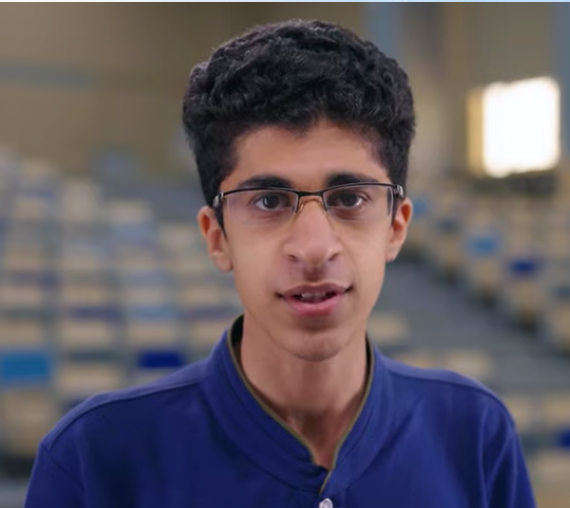 Ahmed Adel
 At KSIU the learning expeince is different and unique. It is an excellent mix of practical learning, best academic staff, and a lot of activities to do in my free time.

Latest Blog
-
KSIU delegation has participated in South Sinai celebrations for Sinai Liberation Day
Apr 24, 2024 -
Translation and Simultaneous Interpreting in German students Earn 5 DAAD Scholarships
Apr 18, 2024 -

King Salman International University announces Bid No. (2) for the year 2024, with closed envelopes, to rent a space to work in a pharmacy activity
Apr 18, 2024