Why KSIU?

img

Why KSIU?

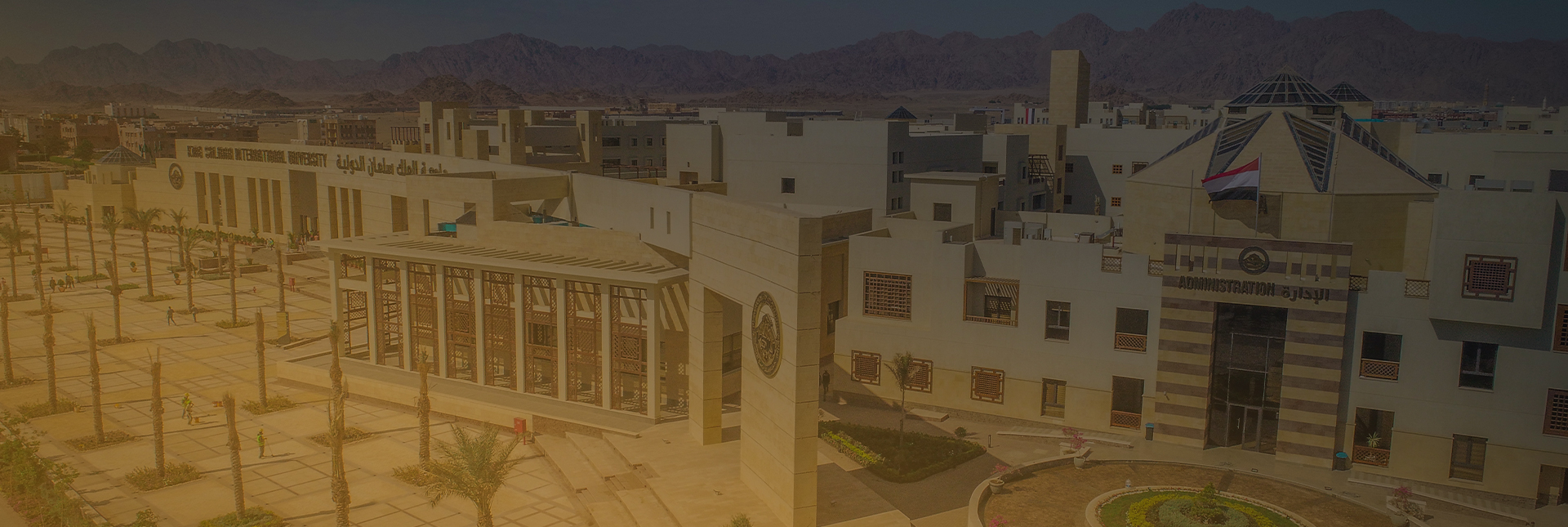
King Salman International University (KSIU) is a new smart university in the heart of Sinai-Egypt, consolidated by the Decree of the President of the Arab Republic of Egypt issuing Law No. 12 of 2009 Regulating Private and National Universities and its executive regulations.

KSIU Operates on three smart campuses (El Tur, Sharm El-Sheikh, Ras Sudr), and adopts innovative learning techniques, and international standards.  

KSIU provides a higher education that promotes innovation and raises a generation that is capable of regional and global leadership with the aim of pioneering academic excellence and scientific research on an international scale.

Why KSIU?

World Class Education

King Salman International University (KSIU) is a new smart-university with a special nature, located in the heart of Sinai-Egypt, and consolidated by the Decree of the President of the Arab Republic of Egypt issuing Law No. 12 of 2009 Regulating Private and National Universities and its executive regulations.

Non-Conventional Location

KSIU operates from three smart campuses located in Sinai; Sharm El Sheikh, Al Tur, and Ras Sudr. The three cities were chosen to be the centre of the newest higher education experience and pioneering scientific research, based on their strategic location that allows students from all across Egypt and all around the world to access a beyond conventional experience.

Smart University

The three campuses of KSIU are smart, which means they are safe, efficient and green, thanks to the latest IoT (Internet of things) based technology. The smart campus not only offers the students an exceptional on-campus experience but also revolutionized learning and assessment ( smart classrooms and labs ).

Practice-based Learning

KSIU’s programs and learning experience were designed to create extremely highly skilled human calibres. The learning methods rely mainly on the on-hand experience, that’s why KSIU provides the students with over three hundred state of the art labs, and internship opportunities, to ensure that each graduate is ready for the local and international market with boundless opportunities.

Accreditation

KSIU operates under the Decree of the President of the Arab Republic of Egypt issuing Law No. 12 of 2009 Regulating Private and National Universities and its executive regulations, which means that all the degrees awarded by the university are accredited and their holder will be able to apply to the syndicate of their chosen program.

Academic Excellence

KSIU created an integrated environment that promotes academic excellence through distinguished and highly qualified academic staff that is capable of responding to international scientific progress, and a carefully selected wide range of programs that serve the careers of the future.

Subscribe Newsletter

To get more updates subscribe our newsletter

Technical Support and Accreditation Readiness Committee carries out the following activities:


  1. Providing technical support to the Quality Assurance Units in the faculties for managing quality systems and monitoring the implementation of related procedures.
  2. Offering technical support to the university’s faculties to obtain local and international accreditation.
  3. Designing and developing monitoring and evaluation templates to ensure the quality of various activities within the university.
  4. Preparing and implementing field visit plans or periodic meetings with the Quality Assurance Units in the faculties—either in person or remotely.
  5. Preparing an annual report on the committee’s activities and submitting it to the Director of the Center.

Strategic Plan Implementation Monitoring Committee undertakes the following activities:


  1. Regularly reviewing the university’s vision and mission in light of new developments, and supervising their periodic update with the participation of all relevant stakeholders.
  2. Developing the university’s environmental analysis methodology and setting implementation plans that ensure the participation of all parties, in coordination with the Center’s administration.
  3. Supervising the preparation of environmental analysis tools, ensuring their appropriateness for the targeted groups of each tool.
  4. Proposing updates or modifications to the university’s strategic plan and ensuring it is communicated to all concerned parties through various channels.
  5. Following up on the implementation of the university’s strategic plan activities.
  6. Providing technical support to faculties in preparing and following up the implementation of their strategic plans in alignment with the university’s overall strategy.
  7. Organizing training sessions in the field of strategic planning for faculty members and teaching assistants, delivered by the National Authority for Quality Assurance and Accreditation, in coordination with the Center’s Training Unit.
  8. Preparing an annual report on the committee’s activities and submitting it to the Director of the Center.

Training and Human Resources Development Committee undertakes the following activities:


  1. Preparing the Center’s annual training plan to meet the needs of the Center’s internal committees as well as the faculties and administrative departments of the university regarding educational quality. This is based on training needs assessment results, followed by the design of appropriate training programs.
  2. Implementing training courses designed by the Center and issuing certificates upon completion.
  3. Coordinating the organization of training programs offered by the National Authority for Quality Assurance and Accreditation of Education (NAQAAE) or other relevant entities.
  4. Measuring the impact of training, evaluating its outcomes and effectiveness, and preparing the required reports.
  5. Providing awareness and technical support in the field of training to the Center’s internal committees and to the training committees of the Quality Assurance Units in the faculties.
  6. Establishing a comprehensive database that includes all training programs conducted by or under the supervision of the Center, including the number and names of participants, as well as follow-up and evaluation reports for each course.
  7. Preparing an annual report on the committee’s activities and submitting it to the Director of the Center.

Measurement and Assessment Committee carries out the following activities:


  1. Promoting a culture of measurement and assessment and raising awareness of the importance of developing assessment processes as a cornerstone of improving the university’s educational system.
  2. Providing technical support to faculties in reviewing assessment methods, tools, and examination results.
  3. Issuing guidelines and regulations for developing assessment and examination systems in accordance with the approved National Academic Reference Standards (NARS), and disseminating them among the faculties’ measurement and assessment committees.
  4. Training faculty and teaching assistants in measurement and assessment techniques in collaboration with the Training Committee.
  5. Following up on the preparation and updating of question banks for academic courses in alignment with learning outcomes and program academic standards.
  6. Monitoring satisfaction indicators among students and faculty regarding assessment systems, student evaluation, and examinations within faculties.
  7. Reviewing and preparing annual examination evaluation reports, developing executive plans for corrective actions to address weaknesses, and enhancing strengths.
  8. Encouraging faculties—especially those with large student numbers—to apply electronic assessment systems, including e-examinations, e-marking, and exam results analysis.
  9. Providing technical support to faculties’ measurement and assessment committees in conducting statistical analysis of automated grading results.

Surveys, Publication, and Sustainability Committee performs the following activities:


  1. Designing surveys to collect feedback from all relevant stakeholders, including:
    • Internal stakeholders (faculty members, teaching assistants, students, and administrative staff) regarding the performance and activities of the university/faculty.
    • External stakeholders, such as employers and community beneficiaries, regarding the quality and competence of graduates.
    • Field training providers, to evaluate and improve students’ skills through continuous feedback.
  2. Collecting, analyzing, and summarizing survey results from the various faculties, and proposing corrective actions in coordination with the concerned faculties.
  3. Conducting satisfaction surveys for participants in training programs organized by the Quality Assurance and Accreditation Center, analyzing data, and preparing statistical reports to be presented and discussed at the University Council.